
December 2025
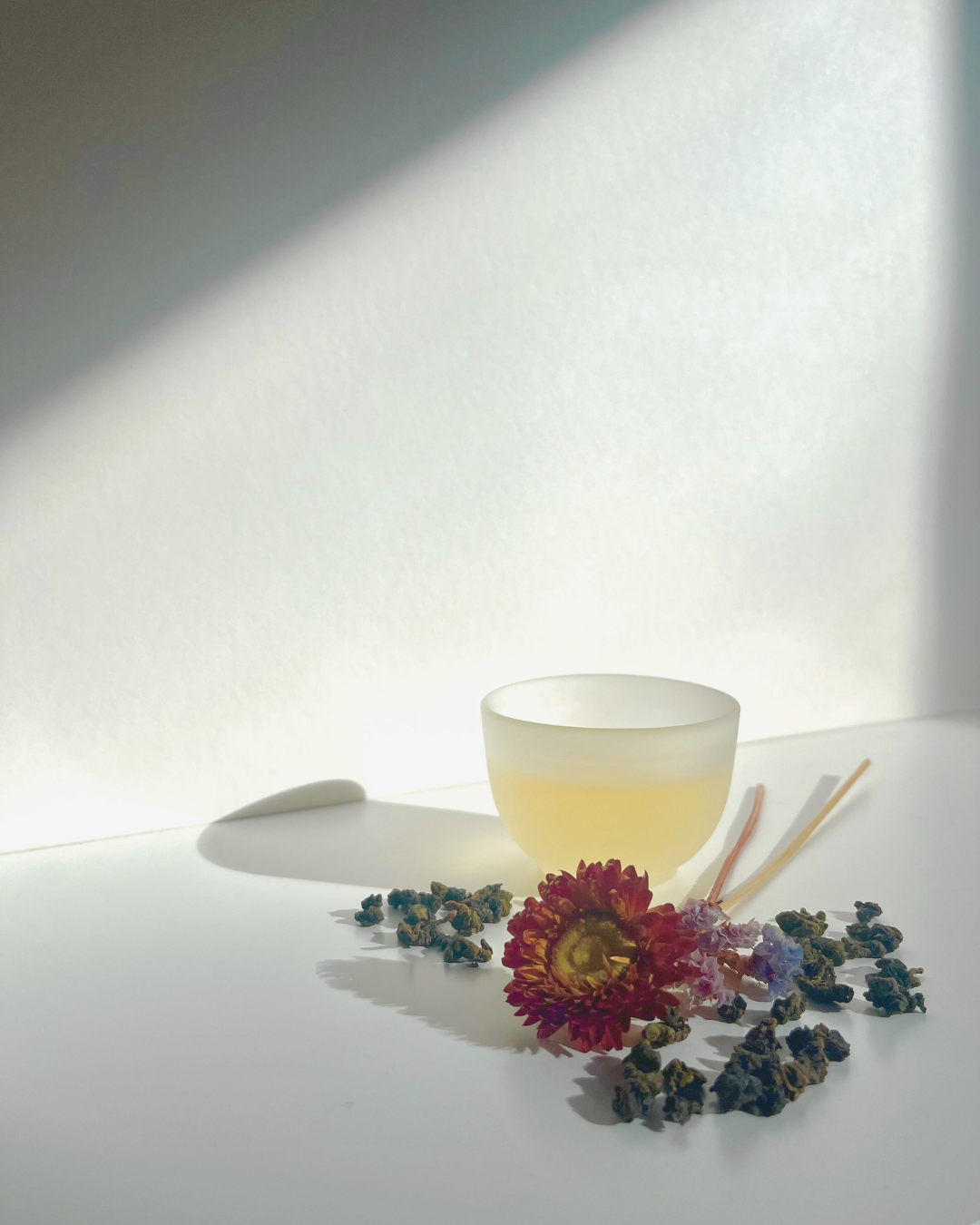
Oolong – the art of the in-between
Most people are familiar with green and black tea, even if the details are often a little unclear. But oolong? To understand what this special tea is all about, let’s first clarify the basics.
A question of oxidation
As explained in our previous tea article, the tea plant, Camellia sinensis, is the source of all teas. Once the young leaves have been harvested, they can be used to produce all types of tea.
When the leaf is rolled after harvesting, the plants liquid components are released and begin to oxidize when exposed to air. The leaf turns dark and the plant substances which determine the teas flavor change. Once oxidation is complete, we obtain black tea.
However, if the tea leaves are treated with heat after harvesting, this destroys the mechanism that causes the leaf to oxidize. This is how we obtain green tea.
A spectrum of enjoyment
Not oxidized means green, fully oxidized means black – so far, so good. But what happens when tea is allowed to oxidize a little, but this process is stopped before it turns into black tea? The answer is oolong.
This term describes a spectrum of oxidation stages between green and black tea, offering enormous variety. On the green side of the spectrum are gentle and floral notes. On the darker side are nutty and fruity aromas.
A rich and impressive tradition of craftsmanship that invites you to taste and marvel.