
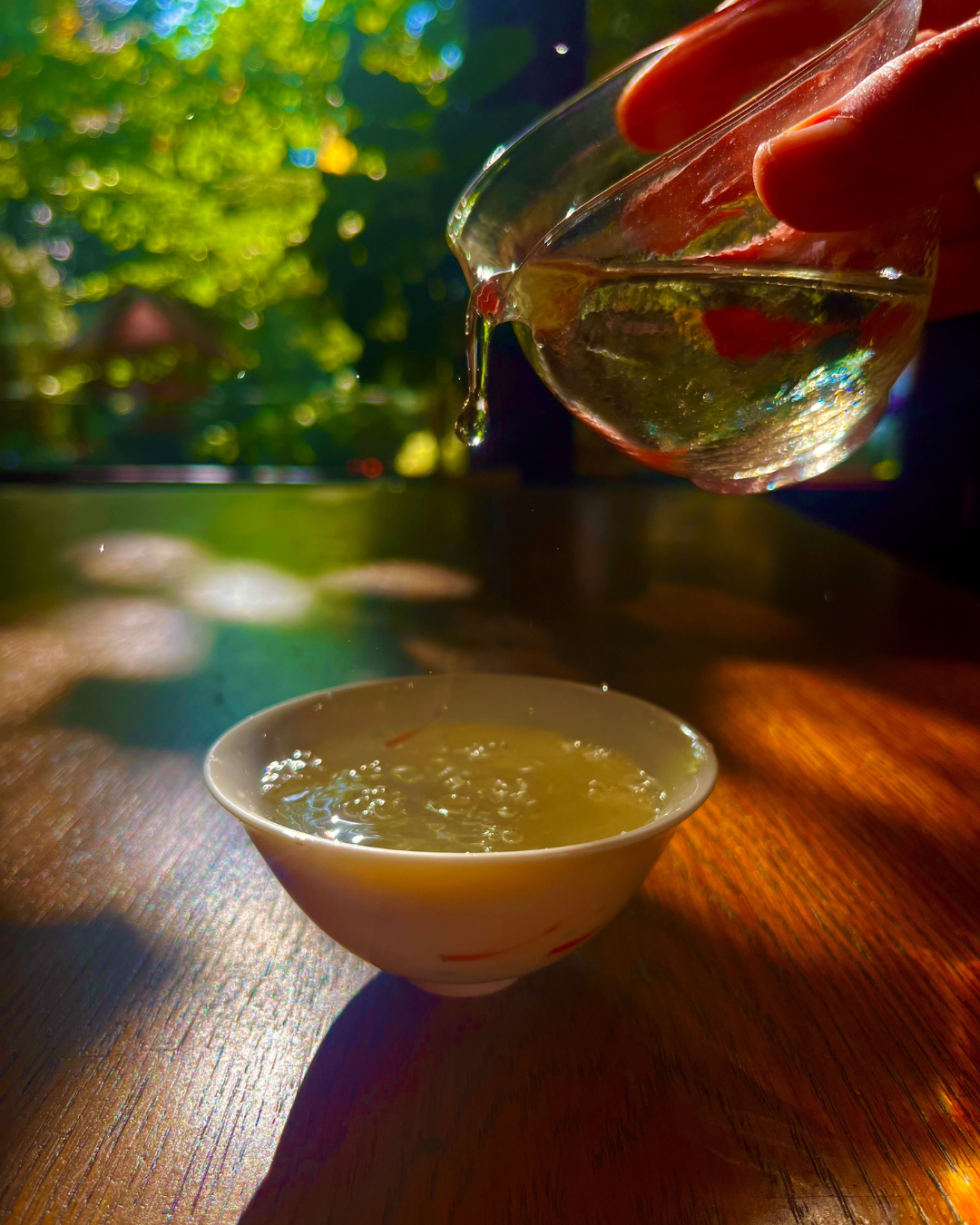
June 2026
Jasmine – The Scent of Heaven
In Germany, when most people think of flavored teas, they probably think of vanilla black tea or cream-caramel rooibos. But long before Europe began adding flavor blends to teas, a tea was developed in China whose delicate, natural aroma continues to delight people to this day.
Young shoots and fragrant blossoms
Today, jasmine tea is a specialty that is popular throughout much of East Asia and is produced to the highest standards. For particularly fine teas, the young shoots of the tea bushes are harvested in the spring, processed, and stored. As soon as the jasmine trees begin to bloom in the summer, the process begins: The tea and the fresh jasmine blossoms are layered and left to rest together overnight. The next day, the blossoms are sorted out, and the process is repeated with fresh blossoms.
Over the course of several such rounds, the tea leaves absorb the fragrant aroma of the blossoms. Finally, all the blossoms are removed, leaving behind a fresh, fragrant tea that delights the senses. The highest-quality jasmine teas have been scented up to six times and, aside from the aroma, contain no traces of the blossoms.
A Symbol of Hospitality and Harmony
In China, the jasmine flower is not only a symbol of beauty, but also of harmony and hospitality. Especially in southern China, it is therefore customary to welcome guests with high-quality jasmine tea. This is a sign of respect, as the tea has always been considered extremely precious due to its labor-intensive production process, which can take up to half a year.